
Why It Matters
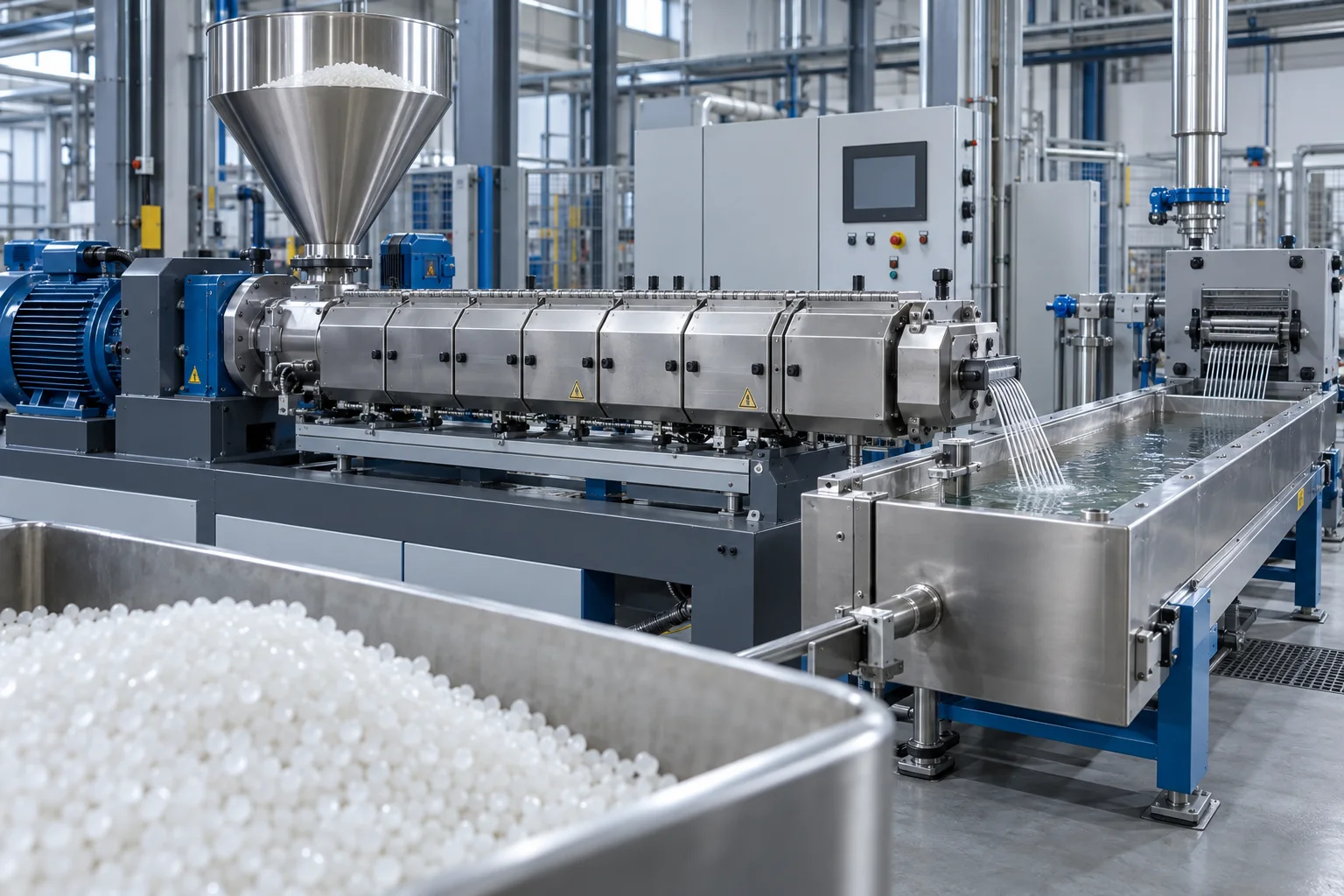
Recycled feedstock can vary more than virgin resin, so line design must create a controllable process window around feeding, filtration, melt pressure and pellet quality.
Key Data Points
| Topic | Planning Note |
|---|---|
| Main variable | Moisture, contamination and bulk density |
| Control priority | Stable feeding and melt pressure |
| Quality output | Consistent pellet size and formulation repeatability |
Characterize the feedstock
A realistic material profile helps set the right feeder, degassing, filtration and wear-part assumptions.
Design for variability
The line should make pressure, temperature and torque visible so operators can respond before quality drifts.
Protect the downstream process
Filtration and pelletizing choices influence how easily the final material can be used by the next process.
Use trials to set the window
Sample runs are essential for learning where output, quality and energy use are balanced.
Document the recipe
Recycling projects become repeatable when material lots, settings and quality checks are captured in a usable recipe.